
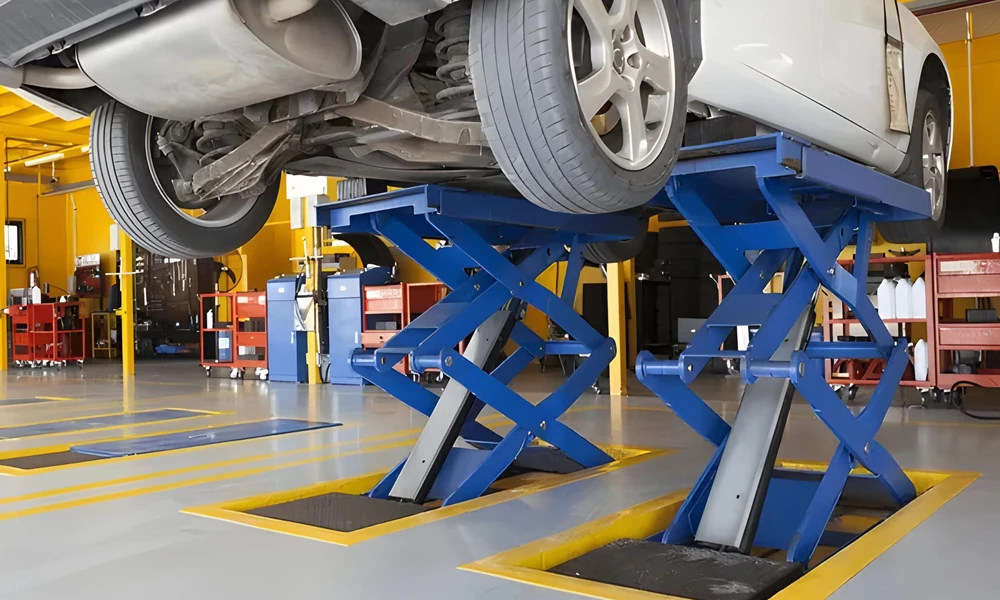
Modern automotive restoration facilities prioritize workshop flow optimization to handle structural damage efficiently. Utilizing a specialized drive on bench with scissor lift platform reduces structural evaluation setup times significantly. Technicians achieve immediate under body viewing clarity by raising damaged chassis to ergonomic heights quickly. This combined structure minimizes physical movement errors during delicate frame measurement routines. Precise straightening equipment integration guarantees higher throughput metrics across busy workshop floors. Structural restoration accuracy rises when technicians eliminate manual floor jack operations completely.
Improving Workshop Flow and Vehicle Positioning
Integrated structural anchoring stations allow rapid vehicle placement without separate lifting machinery. Technicians roll damaged chassis directly onto horizontal platforms to begin immediate assessment. This eliminates mechanical blockages inside modern service bays during peak working hours. Smooth alignment transitions ensure rapid deployment of measuring instruments across target points.
Advanced Mechanical Under body Structural Fastening Methods
Universal holding clamps secure unibody frames firmly against high pressure pulling forces during realignment. Correctly positioning structural anchors prevents dangerous slipping hazards when hydraulic rams apply heavy pressure.
- Hardened steel teeth bite securely into lower perimeter pinch welds.
- Adjustable mounting bars accommodate varying wheelbase configurations without custom adapters.
- Vertical anchoring towers connect smoothly at multiple points around the perimeter.
- Heavy structural cross members distribute pulling stress evenly across the frame.
- Threaded turnbuckles allow minute height adjustments during initial structural setups.
- Quick lock wedges minimize manual tool turning actions during attachment.
- Dual chain slots offer secure tie down points for ancillary equipment.
- Rotational base plates permit angled pulling setups on complex corner damages.
Enhancing Technician Ergonomics during Major Structural Realignment
Alleviating physical strain improves focus during complex multi-point structural restoration jobs. Elevating structural frames to waist level removes regular bending requirements during long shifts. Technicians inspect lower frame components thoroughly while maintaining upright working postures easily. Improved physical conditions directly correlate with fewer workplace injuries over operational cycles.
How Structural Technicians Identify Frame Deviations Accurately
Electronic three dimensional measuring systems verify millimeter accuracy against original manufacturing specifications. Technicians track real time structural adjustments through connected software monitors during active pulls.
Target points under the chassis remain clear from obstruction due to open frame spacing. Regular monitoring prevents over correction of critical structural dimensions during heavy pull cycles.
Common Operational Inquiries Regarding Workshop Equipment Setup
- How does this integrated setup handle low clearance body panels? Sliding drive ramps allow lowered vehicles to ascend without touching lower body moldings.
- What maximum weight threshold does the hydraulic lift structure support safely? Standard heavy duty commercial variations manage vehicles up to four tons easily.
- Can electronic measuring tools coordinate alongside hydraulic pulling attachments? Open framework design ensures laser scanners track measuring points without metal blockages.
- Is manual anchoring required after the scissor apparatus reaches target heights? Mechanical safety locks engage automatically at multiple levels during the ascent.
- How long does initial vehicle mounting take for standard frame checks? Experienced mechanics complete the entire anchoring setup within fifteen minutes total.
Maximizing Floor Space Utilization Inside Restructured Automotive Facilities
Compact structural machinery footprints allow smaller workshops to execute major chassis restoration tasks. Dual purpose lifting setups replace separate dedicated inspection bays to conserve valuable space. Lowering the main platform flat enables standard mechanical servicing on the same floor.
Operational Component Comparison Metrics
| Component Type | Main Functionality | Operational Benefit |
| Scissor Lift | Vertical elevation adjustment | Creates ergonomic technician work zones |
| Drive On Bench | Horizontal vehicle anchoring platform | Accelerates vehicle loading sequences significantly |
| Pulling Tower | Applies multi directional forces | Corrects major structural steel deviations |
| Measuring System | Verifies chassis dimension data | Guarantees factory alignment replication accuracy |
Maximizing Structural Shop Production Yields Long Term
Investing in a reliable drive on bench with scissor lift unit stabilizes daily garage workflows. Having standardized mounting procedures ensures consistent output regardless of individual technician skill differences. Modern workshop owners optimize floor production capacity by standardizing their core diagnostic setups. Reliable heavy machinery forms the physical foundation for predictable structural repair cycles.
Establishing Reliable Workshop Execution Consistency
Achieving high operational accuracy relies heavily on executing standard workshop procedures correctly every single day. Consistent execution using standardized framework machinery removes unpredictable variables from complex mechanical reconstruction workflows. Workshops build long term client trust through systematic adherence to repeatable precision metrics. Reliable machinery remains a primary asset for maintaining strict corporate structural safety guidelines over time.

Comments are closed.