
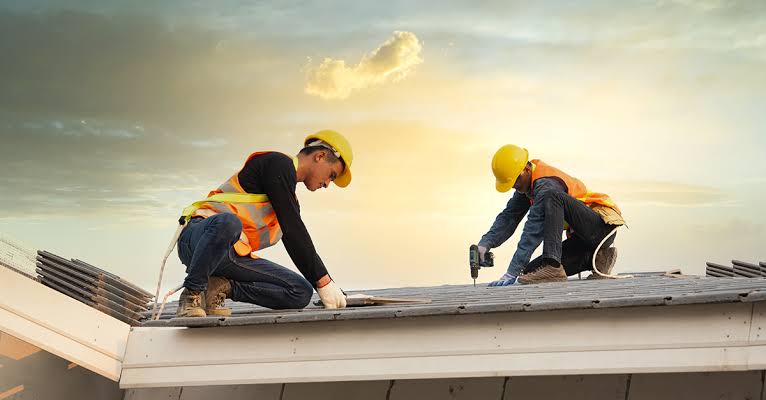
Eleven years. That is roughly how long a well-installed commercial membrane should last in Greenville before you start budgeting for a replacement, and most building owners discover that clock only when a ceiling tile drops. The Upstate does not stress a roof the way the coast does, but it does something sneakier: it bakes the membrane all summer, then cracks it with spring hail and a few hard freezes in January. Understanding that cycle is the difference between a roof you forget about and one that eats your capital budget.
If you own or manage a warehouse near Woodruff Road, a medical office off Pelham, or a retail strip downtown, the decision in front of you is not really “which roofer is cheapest.” It is “which roofer understands what this climate does to a flat roof.” That is where commercial roofing contractors in Greenville, SC separate themselves, and it is the lens to use when you interview them.
Below, you will see what the local climate actually puts your roof through, how a proper assessment works, and the practical questions that expose a bad bid before you sign it.
What the Upstate climate does to a low-slope roof
Greenville sits in a pocket where summers push the surface temperature of a black EPDM membrane well past the air temperature. Add the region’s history of afternoon thunderstorms and occasional hail, and you get a two-front attack: heat ages the material, storms test every seam and penetration.
The National Oceanic and Atmospheric Administration tracks the severe weather patterns that drive storm season across the Southeast, and the pattern matters to you. Hail does not always puncture a membrane. Often it bruises the reinforcement underneath, and that damage stays invisible for a year or two until water finds it. A roofer who walks your roof after a storm and only looks at the surface is not giving you an assessment. A roofer who probes, photographs, and documents is.
Why “we do residential too” is a red flag for your building
Flat and low-slope roofs are a different trade from shingle work. TPO and EPDM membranes are heat-welded or glued, and the seams are the failure point on almost every leak I have seen described by property managers. A crew that spends most of its week on asphalt shingles simply does not get the same repetitions on seam welding.
Ask directly: what percentage of your work is commercial, and what membrane systems do you install most? You want a specific answer with product names, not a vague promise. I would take a roofer who installs two systems extremely well over one who claims five. Depth beats breadth on a roof you plan to keep for two decades.
What a real roof assessment looks like
You should be able to watch the process and understand it. A credible assessment produces documentation you keep in a file, not just a number on a proposal.
- Core samples or probe cuts to measure insulation thickness and identify every layer of the existing assembly
- Photographs of every seam, drain, curb, and penetration, labeled by location
- A moisture survey, either infrared or nuclear, to find trapped water in the insulation
- A written summary that separates “repair now” from “budget for later”
That fourth item is the one most bids skip. A roofer who tells you what you do not need to fix yet is telling you something about how they will treat you on the big job later. I would rather pay for a thorough survey than get a free walkthrough that ends in a one-page quote.
Repair, restore, or replace: a three-line decision rule
Here is the framework I would apply to a building in this market, and you can run it yourself before you call anyone.
- The 25 percent rule. If the damaged area is under a quarter of the roof and the membrane is under ten years old, repair is usually the right call. Above that, replacement math starts winning, because patch work on an aging assembly tends to cascade.
- The saturation test. If a moisture survey finds wet insulation across more than a small fraction of the field, coatings and restoration are throwing money at a problem that will return. Trapped water does not dry out under a new top layer.
- The ten-year window. If you plan to sell or refinance the building within a decade, a replacement with a transferable warranty has real value in due diligence. A patched roof invites questions at exactly the wrong moment.
The paperwork that protects you more than the price
Three documents matter, and they cost you nothing to demand.
First, proof of licensing and insurance, including general liability and workers’ compensation, with the certificate sent directly from the insurer rather than handed to you by the contractor.
Second, the manufacturer’s warranty terms in writing, because the difference between a standard and an extended no-dollar-limit warranty is substantial and it depends on the installer being certified by that manufacturer. Third, a written scope that names materials, thicknesses, and the number of layers, so there is no room to substitute a cheaper product mid-job.
The Environmental Protection Agency maintains resources on construction and demolition materials that can help you ask smarter questions about tear-off and disposal, especially if your building predates the 1980s and may carry older materials in the assembly. A roofer who can speak to disposal handling without prompting has done this before.
Timing your project around Greenville weather
Roofing season here is longer than most people assume, but it has edges. Late summer afternoon storms can shut a crew down by two in the afternoon. January cold snaps make some adhesives and coatings fussy. The sweet spots tend to be spring and early fall, which means the good crews book those windows months out.
That is the practical reason to start the conversation early even if your roof is not leaking yet. A building owner who calls in February about an April project gets choices. One who calls in April about April gets whoever is available, and availability is not a quality signal you want to rely on.
A note on wind and hail warranties
The National Technical Information Service collects federal technical reports, and if you enjoy digging, the standards behind wind uplift ratings are worth a look. You do not need to become an engineer. You do need to know that membrane attachment method changes how a roof performs in a wind event, and that mechanical attachment versus adhesive matters in an open, exposed location like an industrial park.
Ask your roofer how they plan to attach the membrane on your specific building and why. The answer should reference your building’s height, exposure, and deck type. If it sounds like a script they use everywhere, it is a script they use everywhere.
Where this leaves you
Your roof is a capital asset on a timer, and the Upstate climate sets that timer with heat, hail, and the occasional hard freeze. The roofer who wins your job should be able to explain the local weather pattern, show you documentation from the assessment, and put warranty and insurance terms in writing without being asked twice. Price matters, but it is the last variable you should weigh, not the first.
Start with a survey, ask the three questions above, and see who answers with specifics. If two contractors hand you near-identical bids with no moisture data and no photos, you have learned something useful about both of them. If you are ready to walk the roof with someone who knows what Greenville summers do to a membrane, the right commercial roofing contractors in Greenville, SC will make that walk count.

Comments are closed.