
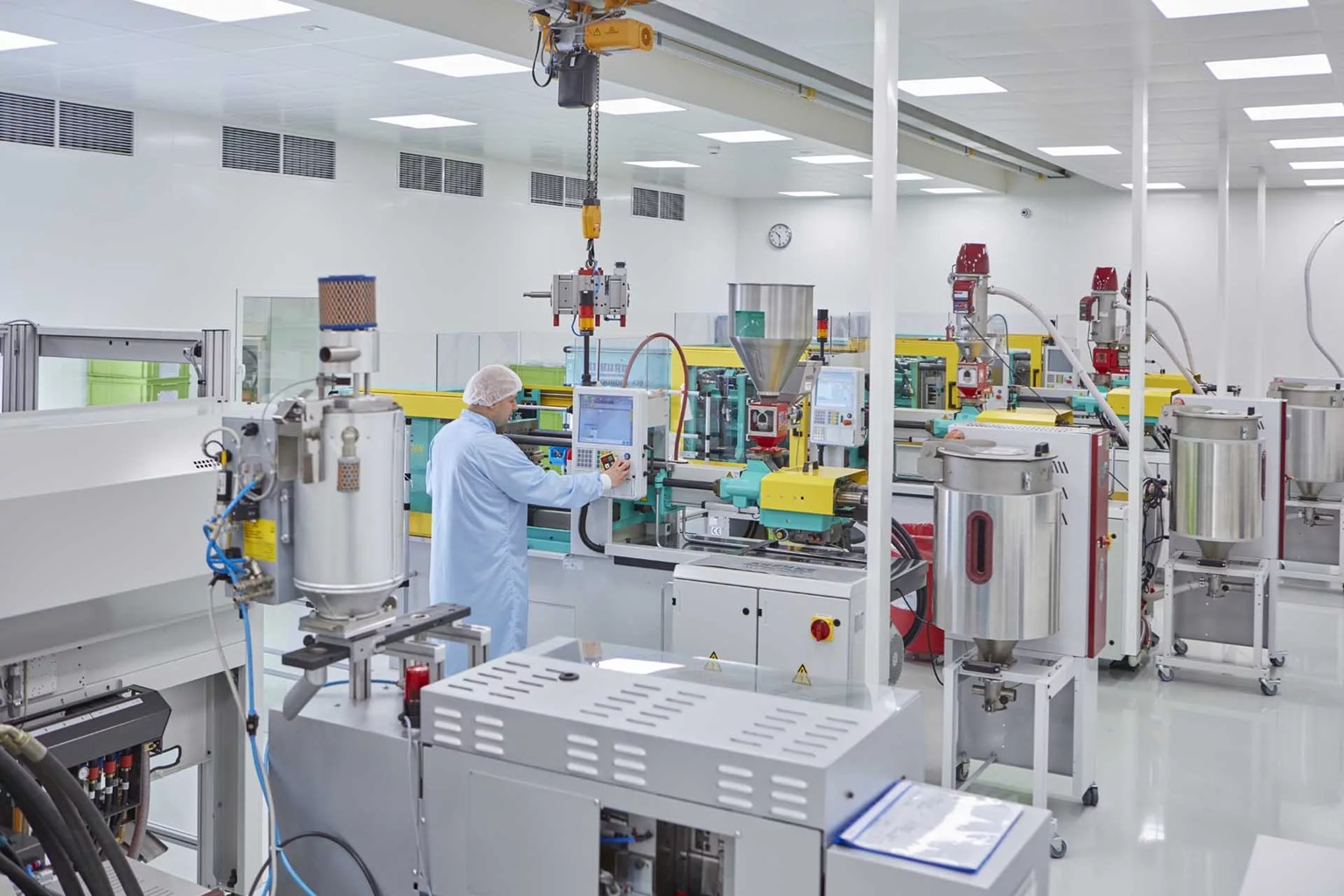
Medical contract manufacturing operates in a realm where the consequences of failure are measured not in lost revenue or damaged reputations alone, but in human suffering and regulatory sanctions that can shut down operations entirely. The industry has grown from modest origins into a multi-billion dollar global enterprise, yet beneath the polished corporate communications lies a more complex reality. Success in this field requires navigating regulatory requirements, maintaining manufacturing precision measured in microns, and sustaining quality systems that leave no room for shortcuts. The companies that survive do so by understanding that every claim must be substantiated, every process validated, and every component traceable from raw material to patient.
The Precision Mandate
The components flowing through medical contract manufacturing facilities often operate at tolerances that would challenge aerospace standards. Surgical instruments require edge geometries sharp enough to cut tissue cleanly yet durable enough to withstand repeated sterilization cycles. Implantable devices must fit within anatomical constraints measured in fractions of millimetres whilst delivering mechanical performance across years of service. Drug delivery systems depend on flow restrictors where dimensional variations of 10 microns can alter dosing rates beyond acceptable limits.
Achieving this precision demands manufacturing technologies chosen not for cost efficiency but for capability. Medical contract manufacturing operations employ coordinate measuring machines that verify dimensions to single-micron accuracy. They utilize metal injection moulding for complex geometries, precision machining for tight tolerances, and cleanroom assembly where contamination is controlled at the particle level. As one industry source explains, manufacturers produce “components with precise geometry and fine features” whilst keeping “everything within strict medical and semiconductor standards.”
The capital intensity is substantial. A single CMM capable of three-dimensional measurement at the required accuracy costs hundreds of thousands. MIM production lines require investments measured in millions. Yet these expenditures prove necessary because the alternative is component rejection rates that make production uneconomical.
Compliance Architecture
The regulatory framework governing medical device production has evolved into a labyrinth that even experienced manufacturers navigate with difficulty. ISO 13485 provides the baseline quality management system, but this represents merely the starting point. European Medical Device Regulation imposes additional requirements. FDA Quality System Regulation adds another layer. Individual countries maintain their own specifications.
Medical contract manufacturing facilities address this complexity through structured compliance programmes:
- Design controls documenting how user needs translate into design inputs, how those inputs become specifications, and how specifications are verified and validated
- Process validation demonstrating that manufacturing procedures consistently produce components meeting predetermined specifications
- Supplier qualification ensuring incoming materials conform to requirements before entering production
- Corrective and preventive action systems identifying problems and implementing solutions before they propagate
- Post-market surveillance tracking field performance and feeding data back into design and manufacturing improvements
Documentation consumes resources that smaller companies often underestimate. A typical medical device file might contain thousands of pages covering everything from biocompatibility testing to sterilization validation to software verification. Industry professionals emphasize that facilities must maintain comprehensive “traceability, validation evidence, and integrated QMS” to satisfy regulatory scrutiny.
Quality Systems Under Pressure
Quality in medical contract manufacturing exists under perpetual tension between competing demands. Production schedules push for throughput. Cost pressures encourage efficiency. Customer expectations demand flexibility. Yet quality requirements remain absolute. A surgical instrument contaminated during assembly cannot be partially acceptable. A dimensional measurement falling outside specification limits cannot be rationalized away.
Leading facilities resolve this tension through quality systems that make compliance the path of least resistance. Operators receive training emphasizing not just procedure compliance but understanding why procedures exist. In-process inspections catch deviations before they accumulate into batch rejections. Statistical process control monitors trends before they produce out-of-specification results. As one medical contract manufacturing operation notes, effective processes ensure components are produced consistently, with systems that minimize “the incidence of defects.”
The cultural dimension matters perhaps more than the procedural. Companies that treat quality as an engineering problem susceptible to systemic solutions outperform those relying on inspection and rework. The difference becomes apparent in key metrics: first-pass yield, customer complaint rates, audit findings, regulatory warning letters.
The Singapore Manufacturing Model
Singapore emerged over recent decades as a centre for medical contract manufacturing through deliberate policy choices and sustained investment. The government cultivated technical education producing engineers trained in precision manufacturing. Regulatory authorities aligned local standards with international requirements, easing export market access.
The concentration of medical manufacturing expertise created reinforcing advantages. Skilled workers developed deep knowledge in specialized processes. Equipment suppliers established regional presence. Industry associations facilitated knowledge transfer. The result is an ecosystem where medical contract manufacturing operations achieve capabilities difficult to replicate in isolation.
Industry observers note that Asian manufacturing now represents “the world’s largest, whether considered in terms of number of parts produced, sales turnover or production volume.” This scale reflects not merely labour cost advantages, which have largely eroded, but genuine technical capabilities and quality system maturity.
The Partnership Calculus
Medical device companies outsourcing production face decisions with implications extending years into the future. Selecting a medical contract manufacturing partner means entrusting proprietary designs, accepting dependence on external operations, and relying on another organization’s quality culture to protect patient safety and regulatory standing. The choice requires investigation beyond facility tours and capability presentations.
For companies willing to invest in genuine partnerships rather than transactional vendor relationships, Medical contract manufacturing provides access to specialized capabilities, regulatory expertise, and quality systems that enable innovation whilst managing the risks inherent in producing devices where failure has consequences measured in human terms.

Comments are closed.